Intuition - Origin and Definition

Telepathy Tapes S2:E6 - Psychedelics and Accessing Consciousness

Children were lost in the Amazon rainforest for weeks [after an airplane crash] when a shaman used Ayahuasca to find them in one day by expanding his consciousness to be one with the rainforest. He used the senses of all the biology within the jungle and it led him to the children.

Summary: This episode blends Indigenous knowledge, historical analysis, and modern science to argue that psychedelics are both:
  • A therapeutic breakthrough for mental health, and
  • A re-emerging pathway to expanded consciousness and spiritual connection
It positions current research as part of a larger rediscovery of ancient human practices that were suppressed but never fully lost.

Disclaimer: This material is provided for educational and informational purposes only. It discusses psychedelics, which may be illegal in certain jurisdictions and can carry physical and psychological risks. This content is not intended as medical, legal, or therapeutic advice. Always consult a qualified professional and follow applicable laws before considering any related practices.

Section Summary:​

1. Introduction: Expanding the Inquiry into Consciousness​

The episode builds on prior discussions of telepathy and plant communication by shifting focus to psychedelics as tools for accessing expanded states of consciousness. It frames psychedelics not just as substances, but as historical and cultural gateways to intuition, perception, and connection with a broader “collective field.”

2. Case Study: Amazon Rescue and Indigenous Knowledge​

A central story recounts the 2023 rescue of four children lost in the Amazon. While military efforts failed, an Indigenous shaman used ayahuasca (yage) in a ceremonial context to locate them.
  • The shaman describes entering a state of shared consciousness with the jungle.
  • He claims to perceive through animals and nature itself.
  • The children were found shortly after his guidance.
This story is presented as evidence of an Indigenous worldview where consciousness is interconnected across humans, animals, and the environment.

3. Indigenous Perspective: Psychedelics as “Technology”​

Indigenous leaders frame psychedelics as:
  • Ancestral technology for accessing spiritual realms
  • A means of communicating with ancestors
  • A tool for navigating life, death, and cosmology
Ayahuasca is described as a “cosmic plant” that enables interaction with other dimensions and forms of intelligence.

4. Historical Context: Psychedelics in Ancient Civilizations​

The episode challenges the assumption that psychedelics are limited to Indigenous cultures by presenting evidence from:
  • Ancient Greece (Dionysian rituals)
  • The Eleusinian Mysteries (Kykeon potion)
  • Archaeological findings of psychoactive substances (ergot, cannabis, opium)
Scholars suggest that foundational Western thinkers (e.g., Plato, Socrates) may have participated in psychedelic rituals that shaped spiritual and philosophical thought.

5. Loss of Western Traditions​

The decline of psychedelic practices in the West is attributed to:
  • Roman Christianization
  • Destruction of pagan temples (e.g., Eleusis)
  • Suppression of ritual knowledge
The episode argues that this led to a broader cultural disconnection from direct spiritual experience and the “divine.”

6. Global Continuity of Psychedelic Use​

Despite Western suppression, psychedelic traditions persisted globally:
  • Africa (Iboga, Kanna)
  • Asia (Amanita muscaria, Soma)
  • Americas (ayahuasca, peyote, mushrooms)
These practices are framed as universal human behaviors tied to spiritual exploration and healing.

7. Modern Therapeutic Use: Mental Health Breakthroughs​

The episode shifts to contemporary research showing psychedelics’ effectiveness in treating:
  • PTSD
  • Depression
  • OCD
  • Addiction
A veteran’s story illustrates rapid emotional healing through guided psychedelic therapy, emphasizing:
  • The importance of preparation and integration
  • The role of trained facilitators
Clinical research (e.g., Yale studies) suggests psychedelics promote neuroplasticity, enabling lasting psychological change.

8. Mechanism: Neuroplasticity and Cognitive Reset​

Psychedelics are compared to:
  • Breaking rigid mental loops (e.g., OCD patterns)
  • “Resetting” brain pathways rather than gradually altering them (like SSRIs)
They create a temporary state where the brain becomes more flexible, allowing new perspectives and emotional processing.

9. Spiritual Experiences in Clinical Settings​

Even in controlled medical environments, participants report:
  • Feelings of unity and oneness
  • Encounters with deceased loved ones
  • A sense of connection to a greater reality
Researchers acknowledge these experiences as psychologically significant, even if not fully understood scientifically.

10. Tension: Medical vs. Spiritual Frameworks​

A key theme is the mismatch between:
  • Western medical models (focused on symptoms)
  • Psychedelic experiences (often existential or spiritual)
The episode argues that current systems lack the language and structure to fully interpret these experiences.

11. Suppression and Survival of Knowledge​

The transcript highlights that:
  • Women historically preserved psychedelic knowledge (herbalists, “witches”)
  • Witch trials and persecution targeted these knowledge keepers
  • Some traditions may have survived underground
This reframes “witchcraft” as a continuation of ancient pharmacological and spiritual practices.

12. Core Thesis: Rediscovering a Lost Human Tradition​

The episode’s central argument:
  • Psychedelics are not new—they are part of humanity’s deep past
  • They were once integrated into ritual, healing, and community life
  • Modern society is “remembering” rather than discovering them
The loss of these practices is framed as a cultural rupture, not a natural progression.

13. Broader Implication: Consciousness Beyond the Individual​

The episode ultimately suggests:
  • Consciousness may be shared or interconnected
  • Psychedelics could provide access to this broader field
  • Human beings have an inherent drive to explore beyond material reality
 
Stuart Hameroff Discussing Consciousness Related to Psychedelics

The scientists thought that the brain would light up during a fMRI scan when a subject was under psychedelics but the exact opposite happened. The video shows a high level concept of why Hameroff believes that consciousness is non-local. Hameroff and Penrose developed a theory on consciousness (Orchestrated Objective Reduction) that has been gaining a strong following in the scientific community.

The reason I think this is important and relevant to intuition is because it attempts to connect a more collective consciousness and perhaps that is how a high level Intuitive "knows" things before happenings. This is not to suggest that the senses don't play a role, only that the origin is separate but interconnected to the body.

 
Sound can go through just about anything.

Tap on a rock wall and hundreds of feet away you hear it almost instantly.

If the frequency of the brain increases time slows down because you experience more in each moment.

So we could say quantum "vibrations" would become detectable if they operate at high frequency and travel through materials and space.

The brain would be sensitive enough to pick up on them. Like bats can travel in the dark.

Though neural plasticity is a structure that it takes time to change connections to involve such sensitivities.

Instead microtubules would induce the cells to resonate faster which the synapses would transmit.

But that would make them antenna for such a field. They would not change the normal operations of brain function like walking.

Since the world is slower we just need attunement to everyday life. To control the body which does not move that fast.

In dreams we do not try to keep consistency of the real world. Many forms come together that do not when awake. Its more fluid that way.
 
Stuart Hameroff Discussing Consciousness Related to Psychedelics

The scientists thought that the brain would light up during a fMRI scan when a subject was under psychedelics but the exact opposite happened. The video shows a high level concept of why Hameroff believes that consciousness is non-local. Hameroff and Penrose developed a theory on consciousness (Orchestrated Objective Reduction) that has been gaining a strong following in the scientific community.

The reason I think this is important and relevant to intuition is because it attempts to connect a more collective consciousness and perhaps that is how a high level Intuitive "knows" things before happenings. This is not to suggest that the senses don't play a role, only that the origin is separate but interconnected to the body.

I just wanted to let you know, I've watched this from start to finish and enjoyed every minute. Thank you for sharing this vid; it was very interesting.
 
Carl Jung's Synchronicity

While Jung did not equate synchronicity with intuition, he implicitly linked them by suggesting that intuition is the psychological function through which meaningful, acausal connections between inner experience and external events are recognized.

The video explores the idea of synchronicity, a concept developed by Carl Jung to describe coincidences that feel deeply meaningful rather than random. It begins with the striking example of Mark Twain’s life aligning with the appearances of Halley’s Comet, illustrating how certain events can appear too precise to be dismissed as chance. Jung argued that true synchronicities are not just coincidences but involve a meaningful connection between an internal experience—such as a thought, dream, or emotion—and an external event, occurring close together in time without a direct causal link. Through examples like the “scarab beetle” incident in therapy, the video shows how such experiences can feel psychologically significant and even transformative.

Building on this, Jung proposed that synchronicity points to a deeper structure of reality in which mind and matter are interconnected, emerging from a unified source he referred to as unus mundus (“one world”). This challenges the conventional scientific view that events are only linked through cause and effect, suggesting instead that meaning itself may connect experiences across the inner and outer worlds. However, the video also acknowledges skepticism, noting that humans are naturally inclined to find patterns and impose meaning, and that synchronicity remains scientifically untestable. Ultimately, the concept raises important philosophical questions about the nature of reality, the limits of human understanding, and whether meaning is discovered in the world or created by the mind.

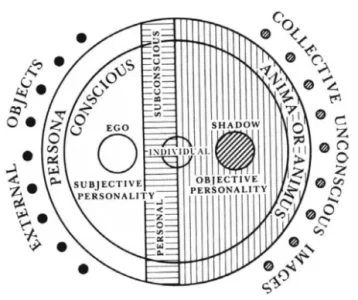
Within the following diagram, synchronicity is not confined to a single part but represents the meaningful alignment between internal psychological processes and external events, emerging across the entire structure as the psyche and reality momentarily reflect one another.
1777396762322.webp
Although this diagram presents the psyche in distinct sections for clarity, Jung understood these elements as deeply interconnected and fluid, continuously interacting and integrating through a dynamic process rather than existing as fixed or isolated parts.
 
Synchronicity is a product of dualism mind.

Things cannot be related because of no-thing-ness and uni-verse.

Singularity, is-ness.

Of course this cannot be proven or measured.

Can it be experienced? I will offer yes, it can.

Jung knew. Or he at least intuited that truth.

Cheers,
Ian
 
Some of Jung's own words on Synchronicity

Quotes:
"It is more often than merely probable... people hate such problems, they can't deal with it."
"Relativation through time and space through the psyche, that's the fact."


People are afraid to talk about it for fear of rejection. People self suppress and this prevents the growth and innovation of the mind. I know we have made progress in this area but people are still slow and resistant to accepting the idea of synchronicity. It happens to me nearly every day and I usually say nothing - it's only when I feel like it will really help someone that I choose to be vulnerable.
 
Connecting Physiology, Retro-Causality, and Experience

I was thinking about two concepts and how both might be combined to produce an effect that many on this forum already... think-feel. The first of these is a level of retro causality which is a bit like the question, "which came first, the chicken or the egg." The second is related to how physiology -specifically the heart- knows and responds almost 6 seconds prior to us being consciously aware. When I think about both of these being combined, it makes me wonder if we are creating an event with our conscious actions OR if we are possibly manifesting it through retro-causality. This could be further extrapolated to include the collective consciousness and a persons immediate interactions on a micro and macro scale. The physics and physiology do seem to be creating a similar effect -I need more information or at least need to gather the information I have already collected. In both the physics and physiology there is an electromagnetic component involved (experiment and created by the heart).

This first video is related to retro-causality, but the presenter has taken it a step further with additional ideas about simulation theory.

The second video is something talked about earlier in this thread related to the heart knowing a choice prior to conscious awareness of that choice.
 
Last edited:
When Science Touches the Edge of the Soul

There is a point where science stops feeling distant and begins to feel uncomfortably personal. A thought experiment about a box, a particle, and a gun becomes something much larger: a question about whether consciousness can ever arrive at its own absence. The mathematics of quantum mechanics, the branching logic of Many-Worlds, the strange activity of dying brains, and the possibility that the mind is not merely produced by the brain all converge around one unsettling idea: perhaps death is not experienced as an ending, but as a boundary consciousness never crosses.

What begins as physics slowly turns into a mirror. If reality is not a single path but a vast structure of possible lives, choices, and moments, then existence may be far stranger than ordinary perception allows. The video does not ask for belief so much as attention—to the places where logic and fear, evidence and mystery, reason and instinct begin to overlap. And perhaps that overlap is where intuition first begins: not as fantasy, but as the quiet recognition that the mind may be responding to more of reality than it can fully explain.

This video will likely resonate in a way that draws upon parts you already knew yet collectively paints a bigger picture..

━━━━━━━━━━━━━━━━━━━━━━━━
⏱ CHAPTERS
━━━━━━━━━━━━━━━━━━━━━━━━
0:00 — The Box With The Gun Inside
1:40 — Tegmark's Math Says You Cannot Die
7:34 — What A Michigan Lab Recorded After The Heart Stopped
10:43 — The Two Men Who Built Consciousness From Spacetime
18:05 — Your Brain Is Not Generating Your Mind
22:15 — Einstein's Last Letter Was Not A Kindness
29:55 — Return To The Box (And Why It Never Mattered)
━━━━━━━━━━━━━━━━━━━━━━━━
🔎 KEY CONCEPTS IN THIS VIDEO
━━━━━━━━━━━━━━━━━━━━━━━━
Quantum Suicide | Many-Worlds Interpretation | Quantum Immortality | Orch-OR | Objective Reduction | Microtubules | Block Universe | Eternalism | No-Deletion Theorem | Biocentrism | Near-Death Experiences | Gamma Wave Surge | Decoherence | Quantum Coherence in Biology | Hugh Everett | Max Tegmark | Stuart Hameroff | Roger Penrose | Jimo Borjigin
 
Last edited:
The NDE of Pam Reynolds
A Surgery with an Ideal Experimental Scenario

Pam Reynolds’ near-death experience is one of the most frequently discussed cases in debates about consciousness because it occurred during a rare surgical procedure in 1991 to treat a large brain aneurysm. During the operation, her body temperature was lowered, her heartbeat and breathing were stopped, her eyes were taped shut, and speakers in her ears emitted loud clicking sounds used to monitor brainstem activity. Reynolds later reported an out-of-body experience in which she perceived details of the surgical instruments, conversations, and events in the operating room, followed by a more classically described NDE involving movement through darkness, encounters with deceased relatives, and a powerful sense of love, clarity, and expanded awareness.

The case is often used to raise the possibility of non-local consciousness, meaning consciousness may not be fully produced by the brain but instead may operate through, or be filtered by, the brain. If interpreted that way, Reynolds’ experience suggests that awareness might persist or function beyond ordinary sensory channels and beyond normal brain activity. This has possible implications for intuition, which could be understood as access to information not derived from linear reasoning or the five senses, and for collective consciousness, where minds may be interconnected at a deeper level than ordinary individuality suggests. A cautious interpretation is that the case does not prove non-local consciousness, but it does challenge strictly materialist assumptions and supports continued study of whether consciousness is local, brain-bound, or part of a broader field of awareness.

The “Standstill Procedure”:

Pam’s experience:

A truly fascinating experience and perplexing idea to comprehend.
 
Learning Through (Epi)Genetic Inheritance

I'm not sure of what to think of this just yet or how this could potentially fit into intuition or a collective consciousness but there is an underlying feeling that it could very easily be the case. I've often wondered how some animals simply "know" what to do so quickly after birth and if they didn't know then they would not survive. Could intuition be a genetic or epigenetic inheritance in the same way that animals have survival instincts from birth? This is not to suggest that everyone doesn't have some level of intuition because we do but perhaps the enhancement [in some people] is similar to the way the rats had an increase in sensitivity to certain smells in this experiment. To use a metaphor, it's like turning up the volume on a radio. Yet if the volume can be turned up then could it also be turned back down?

I've seen other similar experiments on this effect that are more compelling but this is the best video I could find on the topic.

 
1) What exactly is intuition and how accurate is it?

It's inherently intangible, because of course, it does not function based on the five (there are actually seven) senses.

Experiencing this is knowing without knowing. That's the best way for me to understand it.

2) Is intuition derived from both genetic and environmental factors and to what extent does each contribute?

IDK. If I had to guess, I would say no because I believe we live in a supernatural world, not only a physical world.

3) Since it is a dichotomy does intuition extend itself from a deficiency in sensory function or is it an extra-sensory state of its own?

Again, IDK. I think a person can use data to intuit. It is less common for INFJs or Ni heavy types. Still, our information has to come from somewhere. Big ???

4) Can intuition be developed?

Yes, but in a very limited sense. We can get better at intuition, but some people are going to have some hard(er) blocks, such as (IMO) atheism and cessationism which rejects the supernatural as a presupposition.

5) What value is there in having and/or developing intuition?

I don't believe it is a value in it's own sake, but rather tends to bring out the soul of a person if they already have a gifting for it.

6) Is there a downside in having and/or developing intuition?

Yes, because often times (not always) people have a lack of a grip on the physical world if a person in high in intuition.

7) Are there other functions or abilities that branch off of a developed intuitive?

Feeling, in general, because it is less concerned with the concrete and has more to do with the subjective/soft information.
 
I find the idea of diminished sensory input interesting because INFJs are often found to be HSPs. This is the opposite of diminished sensory input - you're hyperaware of and have a heightened sensitivity to sensory input. How does this fit into the picture?
I was reading back through the thread—I need to do this in full—and saw many of my posts related to your comment but posted prior. I had used the word degraded and diminished but as I reflected on it I realized those are a bad choice of word to describe it because it’s not really lesser and often sometimes more. Then when I saw your post it synced immediately.

I think you’re right about this but I’m not sure to what degree. I know that many autistic traits include an overload of sensory functions. I myself experience this in many ways, but in that experience it can be debilitating. For example, I hear very well but have tinnitus. I see very well but have dyslexia. My sense of smell can get overloaded and so I try to avoid fragrence.

What I’m suggesting, and I believe you already understand, is that there is an impairment through this hypersensitivity that creates a level of self induced sensory degradation.

I’m not suggesting that everyone experiences this and I don’t have any data (though it makes me wonder what is available) but I’ve been looking at this from one side of the coin. I think what we both are saying is the same thing only from different perspectives.
 
Last edited:
Removing the Brain but Keeping the Mind

We can explore many aspects for where the mind is located but the best scientific way to test a theory is to exclude parts of an equation and then analyze what is left. This reminds me of the quote by Sir Arthur Conan Doyle through his character Sherlock Homes, "When you have eliminated the impossible, whatever remains, however improbable, must be the truth."

As I've been exploring the origin of both intuition and consciousness I have identified many aspects that suggest the mind is non-local but this is heavily challenged by neuroscience and Western medicine. So, I thought I might present one aspect of this that begins to push towards excluding the brain as being the origin of the mind.

In this video you will experience a girl who had a hemispherectomy (removal of half the brain.) You will be able to see how she now functions and have the opportunity to process part of this exclusion towards making some level of educated determination.

I know that this does not definitively exclude the brain in whole from the mind but it does exclude half of it. Food for thought - no pun intended.

Non-Local Consciousness Theories​

Proponents of non-local consciousness argue that the brain acts as a receiver or filter for a universal consciousness field, rather than producing consciousness itself.

  • Near-Death Experiences (NDEs): Research into NDEs provides some of the most cited evidence for this view. Studies document cases where individuals report accurate, veridical observations of their surroundings (including remote locations) while clinically dead with no measurable brain activity. Some researchers interpret this as evidence that consciousness can function independently of the brain.
  • Quantum Consciousness: Recent studies, including a 2026 multicenter trial, have explored whether quantum entanglement plays a role in consciousness. These experiments suggest that aspects of awareness or information processing might persist during clinical death, challenging the standard biological model. However, these findings are preliminary and subject to ongoing debate regarding their interpretation.
  • Terminal Lucidity: This phenomenon, where patients with severe dementia or brain damage suddenly regain clarity and personality shortly before death, is often cited as evidence that the "mind" remains intact even when the physical brain is significantly compromised.
 
I myself experience this in many ways, but in that experience it can be debilitating. For example, I hear very well but have tinnitus. I see very well but have dyslexia. My sense of smell can get overloaded and so I try to avoid fragrence.

What I’m suggesting, and I believe you already understand, is that there is an impairment through this hypersensitivity that creates a level of self induced sensory degradation.

Impairment rather than it being diminished is exactly what I had in mind. It's similar for any functions that are lower in a type's stack. Inferior Fe might mean an IxTP is hypersensitive to social feedback that an ExFJ would handle more smoothly, for example.

Your examples remind me of my misophonia. It's chewing, food, that's the worst. I tell no one about it, because I don't want to inconvenience anyone, or make anyone feel self-conscious about their eating habits. So I sit there, quietly struggling while I am fighting the urge to run from the room, the sounds I'm hearing spiking my distress the longer I stay.

Sensory input is not diminished here. It is heightened, the edges sharp and cutting, rather than soft, mild.

This pairs interestingly with the fact that I am also highly drawn to extreme sensory input, as extreme as possible. If there is an album with 17 tracks on it, chances are my favorite will be whichever one is the loudest, the most aggressive. I want it to be warfare against my ears, punch me in the face with sound and knock my teeth out.

I might not be an Ni user, in case that's helpful for you to know here. Trying to decide between Ni or Ne.
 
How Modern Psychology Actually Categorizes Intuition

When cognitive scientists and psychologists study intuition, they generally measure it using validated scales like the Types of Intuition Scale (TIntS). Mainstream research typically divides intuition into three distinct, evidence-based forms:

1. Inferential Intuition (Automated Expertise)
This is when a process that used to be slow and analytical becomes automatic through intense practice.

Example: A master chess player or an experienced ER doctor instantly recognizing a pattern and knowing the right move without consciously calculating it.

2. Holistic Intuition (The "Big Picture" Hunch)
This involves the brain rapidly sorting through diverse past experiences, memories, and cues, synthesizing them into a single judgment without you realizing it.

Example: A sudden, strong feeling that a business deal or a specific path is the right choice, even if you can't logically explain why yet.

3. Affective Intuition (Emotional/Gut Reactions)
This form of intuition relies strictly on immediate emotional responses or physical visceral signals (the gut-brain axis) to make a decision.

Example: Feeling an immediate wave of unease or comfort upon entering a room or meeting a stranger, triggering a rapid "go or stay" reaction.

—————

The primary types of research using TIntS span three broad domains:
  • Expertise and Skill Acquisition: Evaluating how elite performers transition from slow, deliberate analytical logic to rapid, automatic "inferential" intuition.
  • Clinical and Professional Decision-Making: Testing how healthcare workers or corporate leaders balance emotional gut reactions against holistic data synthesis under high stress.
  • Cognitive Psychology & Behavioral Economics: Studying how different intuition types correlate with personality traits (like Openness to Experience), political beliefs, and vulnerability to cognitive biases.
 
A Demonstration of Inferential Intuition
Understanding the Spirit of Inferential Intuition

Inferential intuition is the transformation of deliberate, agonizing practice into seamless, invisible mastery. It is not a mystical psychic flash or an emotional whim; it is automated expertise. When a person first learns a complex skill, every movement, calculation, and decision feels clunky, loud, and painfully slow, requiring immense conscious effort. Over time, however, a profound shift occurs through thousands of hours of intense repetition and disciplined course correction. The spirit driving this development is a relentless pursuit of pattern recognition—a quiet dedication to absorbing the underlying rules of a environment until the boundaries between thought and action completely dissolve. Eventually, the conscious mind steps aside, allowing the subconscious to instantly synthesize vast streams of data and execute the correct choice in a fraction of a second.

The Jet Fighter Pilot
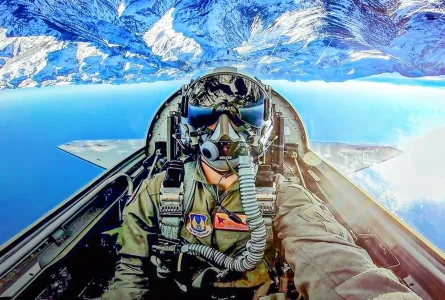
IMG_9244.webp
For a fighter pilot, inferential intuition is forged through years of punishing simulation, tactical drills, and the bone-crushing physical toll of pulling high G-forces. In the early stages of training, a pilot must consciously look at a gauge, interpret the numbers, and deliberately think about moving the flight stick—a process far too slow for modern aerial combat. To survive, they endure a relentless gauntlet of emergency scenarios where instructors intentionally overload their senses with system failures and unexpected threats. Through thousands of flight hours, this brutal repetition rewires the pilot's brain. When an enemy missile warning blares during a low-altitude supersonic run, there is no time for logical debate. The pilot doesn't consciously analyze the radar data; instead, their eyes scan the cockpit, their hands execute a flawless defensive break turn, and they deploy countermeasures in one fluid, instinctive motion, making life-or-death decisions entirely through automated muscle memory and situational mastery.

The Xenolinguist (Fictional Example)
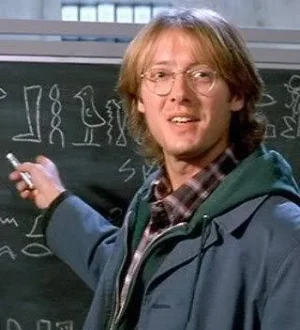
IMG_9245.webp
While fictional, the career of Dr. Daniel Jackson from the original Stargate film perfectly mirrors how slow-paced inferential intuition manifests in a highly specialized academic profession. A brilliant but ostracized linguist and archaeologist, Dr. Jackson developed his remarkable abilities through a lifetime of isolating, meticulous study—spending countless hours manually parsing dead languages, cataloging ancient symbols, and cross-referencing obscure phonetics. To achieve this level of greatness, he endured years of agonizing research, dissecting the rigid, logical structures of grammar and syntax across dozens of historical dialects. When brought into a high-security military installation to decipher a mysterious alien cover-stone, the task appeared hopelessly stalled. While a team of elite military cryptographers spent months relying on slow, mathematical code-breaking computers, Dr. Jackson looked at the enigmatic cartouche and instantly recognized the patterns. He did not need to run a manual translation matrix or guess wildly based on emotion; his subconscious had so completely automated the mathematical rules of linguistics that he instantly saw the symbols not as text, but as a map of star constellations, unlocking the gate to another world through a profound flash of automated academic expertise.
 
Last edited:
When babies are learning the language of their main culture at some point they stop understanding the phonemes or sounds of the characteristics of other languages. I been listening to Japanese songs and they talk really different in both in syntax and the subtle sounds they make, I feel like a baby trying to relearn what they are saying. It is possible by neuroplasticity to learn new languages but you must listen closely. Each language has a way of thinking and feeling not the same as others.

When I was a kid I had hooked on phonics my mom got me and my siblings to learn to read. In japan its not so much about the sounds as the concepts behind the groups of pictures each pictogram represents and is a "visual language" requires more sight driven parts of the brain to understand. The person who translated the rosetta stone in france, he translated it phonetically because of the greek next to it but it is more like Japanese just with different symbols and concepts behind them. They (Japan) do have a phonetic part of the written language but it is used along with the symbolic kind.

What this has to do with intuition is that we take what we know in the unconscious and filter it into the conscious. So reading Japanese feels like hard work for those who do not know it but it is simple for those who speak and write it. Anything we learn is easy if we learned enough of it. Because it goes from the working memory into the unconscious where it happens automatically like talking to a friend. People with math skills have a math intuition. Or a people intuition. Or anything they practice. The unconscious is very powerful at doing things automatically. Whatever that may be.
 
Last edited:
A Demonstration of Holistic Intuition
The Symphony of the Subconscious

Holistic intuition operates as a "top-down" cognitive phenomenon, where your brain captures a sudden, birds-eye view of a situation before processing any individual details. It stands in stark contrast to inferential intuition, which is a "bottom-up" mechanism driven by automated expertise. In inferential intuition, you rapidly stack small, familiar building blocks of past experience to reach a logical conclusion so quickly that it merely feels effortless. Holistic intuition, however, bypasses this step-by-step assembly entirely. It acts like an internal lens that instantly snaps a messy web of fragmented, chaotic cues into a singular, unified picture. Instead of analyzing the individual threads, your mind perceives the entire tapestry at once, granting you an immediate, non-analytical understanding of the big picture.

1781024714943.webp 1781024843329.webp
Imagine walking into a high-stakes corporate boardroom where a critical negotiation is underway, or entering a lively dinner party hosted by close friends. In both environments, holistic intuition functions like a silent radar, reading the room and navigating social friction by absorbing a symphony of micro-cues. You do not consciously log the subtle distance between two executives, the strained pitch of a friend’s greeting, or a fleeting glance exchanged across a table. Instead, your brain synthesizes these scattered social fragments into an immediate emotional landscape. Before a single word of conflict is spoken, you instantly feel the invisible tension of an impending deal collapse or the heavy aftermath of a private domestic argument, allowing you to pivot your strategy or offer comfort before anyone else realizes a shift has occurred.
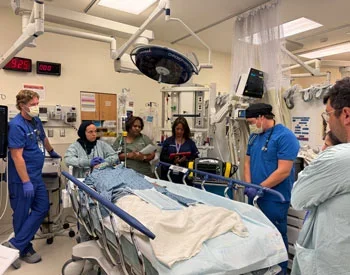
1781025084308.webp
This same macro-level processing transforms the landscape of clinical medicine, turning diagnostic uncertainty into sudden clarity. When a physician is presented with a complex medical case, a patient often presents a confusing, contradictory labyrinth of symptoms—a random skin rash, migrating joint pain, and chronic fatigue. A purely linear approach might get bogged down testing each symptom in isolation, chasing false leads down separate rabbit holes. Holistic intuition breaks through this diagnostic noise. The clinician’s mind subconsciously pools the patient's posture, the specific quality of their exhaustion, and the overlapping timeline of their ailments, allowing the entire scattered puzzle to instantly crystallize into a single, elegant diagnosis of a rare autoimmune disorder.

Stepping into the flow of holistic intuition requires us to trust this wordless, rapid synthesis over the rigid comfort of spreadsheet logic. It is a mental state where chaos transforms into harmony, and where the whisper of a pattern speaks louder than a mountain of unorganized data. In a world obsessed with breaking everything down into metrics, this style of thinking reminds us that true insight often comes from looking at the whole. By learning to tune into these overarching impressions, we unlock a faster, deeper way to navigate the complexities of both our professional ambitions and our most personal relationships.
 
Back
Top