
Akar
ataraxía
- MBTI
- Infj-s
- Enneagram
- 8w9
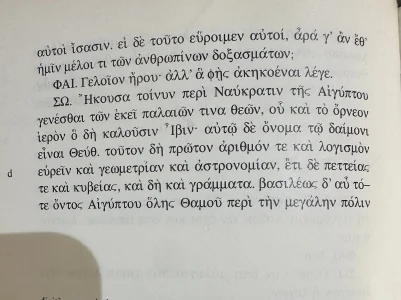
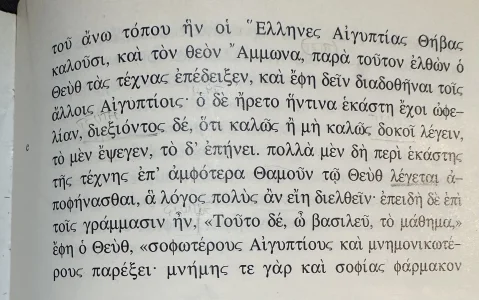
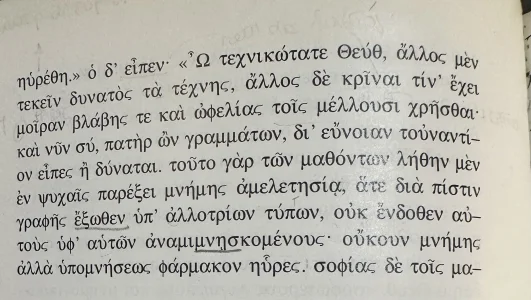
Plato, Phaedrus (274c - 275a)
Socrates: "I heard, then, that at Naucratis in Egypt there was one of the ancient gods of that land, to whom the bird called the Ibis was sacred; and the name of the deity himself was Theuth. It was he who first discovered number and calculation, geometry and astronomy, and furthermore the games of draughts and dice, and, above all, writing.
At that time, Thamus was king of all Egypt, residing in the great city of the upper region which the Greeks call Egyptian Thebes, and they call the god Ammon. Theuth came to him and exhibited his arts, declaring that they ought to be imparted to the rest of the Egyptians. Thamus questioned him as to the utility of each, and as Theuth went through them, the king expressed approval or disapproval depending on whether he thought the claims were well-founded.
It is said that Thamus delivered many judgments to Theuth both for and against each art, which would take too long to repeat. But when they came to writing, Theuth said:
'O King, this knowledge will make the Egyptians wiser and improve their memory; for it has been discovered as an elixir (pharmakon) for memory and wisdom.'
But Thamus replied: 'O most ingenious Theuth, one man has the ability to beget the arts, but another has the ability to judge what measure of harm or benefit they will bring to those who practice them. And now you, being the father of writing, have out of fondness attributed to it the opposite of its true effect.
For this invention will produce forgetfulness in the minds of those who learn it, through the neglect of memory; since, relying on writing, they will remember things from the outside by means of external symbols, rather than from within themselves. You have discovered an elixir not of memory, but of reminding.
To your students, you offer the appearance of wisdom, not true wisdom; for having heard many things through you without instruction, they will seem to be well-informed, while for the most part they remain ignorant—and they will be a burden to society, having become conceited instead of truly wise.
the written word is a silent image that cannot defend itself or answer questions. True knowledge (epistēmē) requires the "living" dialogue of the soul, where ideas are tested and planted in the mind of the learner through dialectic.
-Giammarco